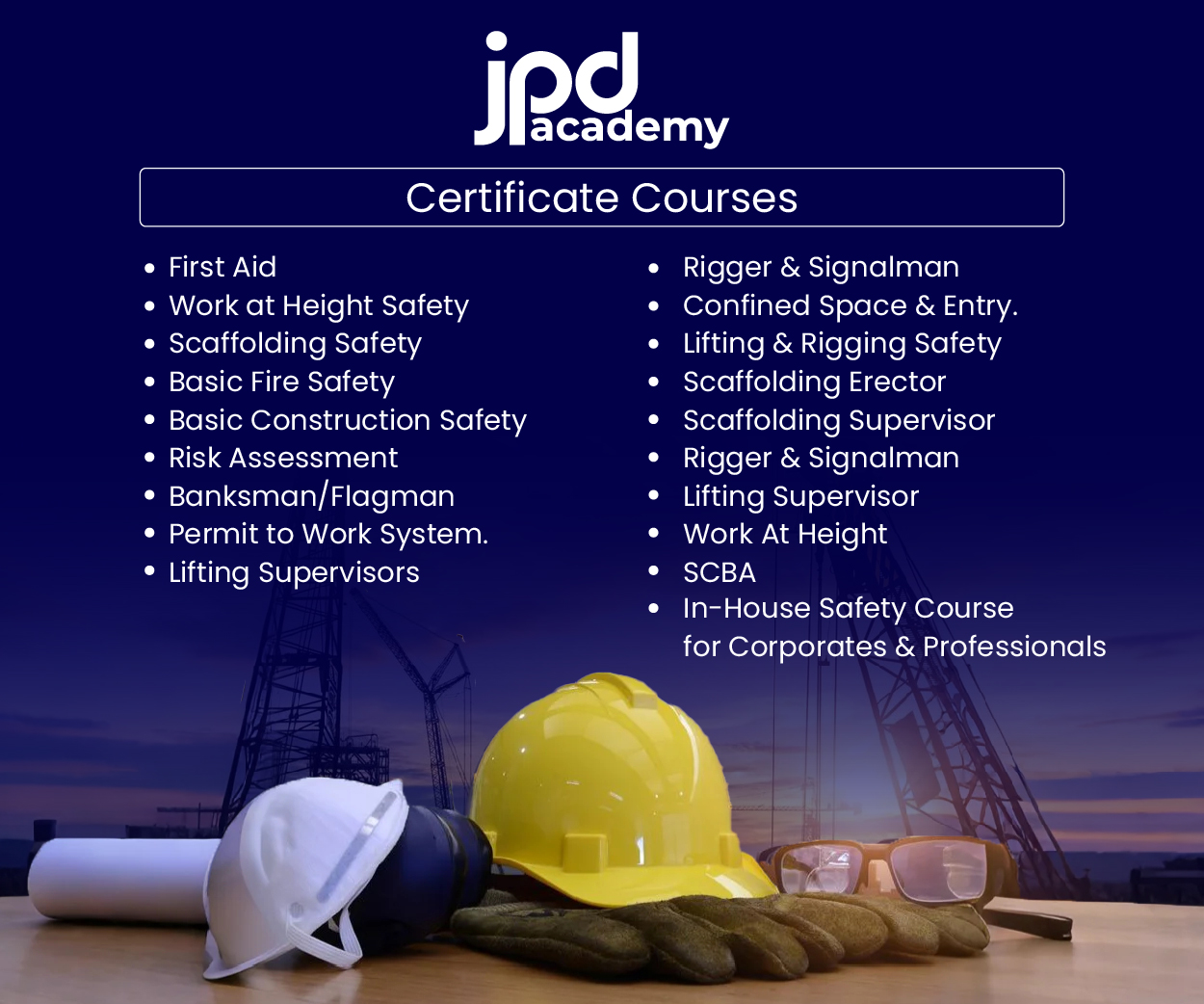
JPD Academy offers a wide range of nationally recognized certificate programs designed to strengthen workplace safety culture, improve technical competency, and promote environmental and sustainability awareness. All programs follow JPD Academy’s structured learning standards, ensuring practical skills, updated knowledge, and real-world application for students and professionals across Bangladesh.

Covers fall hazards, use of PPE, harness inspection, scaffolding safety, permit-to-work, and rescue basics.
Teaches safe lifting techniques, posture correction, musculoskeletal disorder (MSD) prevention, and ergonomic workplace design.
Fire prevention, extinguisher types, evacuation drills, alarm systems, and emergency action planning.
Electrical hazards, shock prevention, lockout–tagout basics, safe work practices, and emergency actions.
Introduces rotating equipment hazards, lockout procedures, machine guarding, pinch point safety, and maintenance protocols.
Covers hazard identification, scaffolding, excavation, confined space, lifting operations, and site safety supervision.
Gas testing, ventilation requirements, entry permits, PPE, rescue methods, and atmospheric hazards.
Rigging gear inspection, load calculations, signal communication, crane operation safety, and lifting planning.
Role of a lifting supervisor, risk assessment, lift planning, workforce coordination, and legal requirements.
Basic scaffolding hazards, inspection, fall protection, and safe assembly/dismantling practices.
Scaffold management, design basics, load limits, inspection checklists, worker supervision, and compliance.
Sort, Set in Order, Shine, Standardize, Sustain—creating cleaner, safer, and more efficient workplaces.
Audit types, inspection planning, tools & checklists, report writing, and corrective action implementation.
Legal requirements, SOP preparation, risk registers, permit systems, and compliance management.
Accident causes, data collection, interviewing skills, and common RCA tools (5W1H, Fishbone, etc.).
Understanding PTW categories, authorization levels, risk control, and field compliance.
Pollution management, waste control, water conservation, and environmental responsibility.
Climate drivers, global warming effects, adaptation strategies, and sustainable lifestyle practices.
Causes, consequences, emission sources, and reduction strategies.
Environmental regulations, monitoring, waste segregation, spill control, and eco-friendly operations.
Energy efficiency, waste reduction, green procurement, and sustainability culture.
Techniques for stress reduction, mental well-being, productivity improvement, and work-life balance.
Handling injuries, bleeding control, CPR basics, shock management, and emergency response.
Supervisor communication, worker engagement, and building a strong safety culture.
Effective workplace communication, body language, and professional presentation techniques.
Safety & Operations
Environment & Sustainability
Industrial Skills